A superhuman guide to Instagram search and its hidden features
Summarize this article via
Instagram search is the in-app tool that matches what you type against usernames, bios, captions, hashtags, places and audio, then ranks the results using your own activity and how popular each one is. It lives behind the magnifying glass on the Explore tab. Type a word and you get 5 tabs of results, and most people only ever look at the first.
That is a lot of unused surface on a platform that passed 3 billion monthly active users in September 2025. This guide covers what each tab does, where the search bar moved, what Instagram won’t let you search for no matter how you phrase it, and whether anyone finds out what you looked up.
The short version
Instagram matches your query against text it can read, meaning usernames, bios, captions, hashtags and place names, then ranks what it finds on your own activity and overall popularity.
Results arrive in 5 tabs, named Top, Accounts, Audio, Tags and Places. Which tabs appear, and in what order, shifts by app version, region and account type.
There is no true keyword search for post captions inside the app. Since 10 July 2025 Google indexes public posts from professional accounts, which makes a site:instagram.com query the closest thing to advanced search that exists.
Captions have been capped at 5 hashtags since 18 December 2025, down from 30. Instagram’s position is that hashtags help search rather than reach.
Nobody is told what you search. Instagram sends no notification for a search or a profile view, and reports no searcher identity in either direction.
What you need to know about Instagram search features
Instagram search for many businesses is a place to get inspiration and discover trends. When you search for topics or accounts of your interest, Instagram sifts through millions of accounts and posts to give you what you are looking for.
Instagram uses signals to rank the search results. These signals include:
Text: The text entered in the search bar is matched with hashtags, usernames, bios, places, and captions to display the most relevant result.
Activity: This is based on the accounts you follow, and the posts you engaged with to show accounts or hashtags that you follow or have viewed more times.
Popularity: The search results are also sifted based on the number of likes, shares, comments, or the number of followers for an account, place, or hashtag.
Here are some best practices for you to improve your brand’s or business’s presence in search.
Since search results are matched on the basis of the text, it is important to go for a handle and profile name that reflects or best describes the contents of your post. If your audience is familiar with your business or brand name, use that name in your profile to improve visibility.
Add important keywords in your bio that again describe who you are. Plus, you can add your location to your bio. This will especially help small businesses, making it easier for your customers to find you and make a good impact on your Instagram analytics.
Lastly, use relevant keywords and hashtags in the caption of your post (not in the comments) to help improve discovery.
Instagram search in 2026: What actually helps you show up
Discovery here runs on plain language now. The ranking signals themselves haven’t changed, but the weight has moved off tags and onto the words you actually write, and two platform changes make that concrete. Captions are capped at 5 hashtags, and public posts from professional accounts are now indexable by Google. Both reward the same behaviour, which is describing your content the way a person would type it.
Optimize your “Name” field (not just your username) with your main keyword (e.g., “Skincare clinic Istanbul”).
Repeat your core keywords in your bio so Instagram can match you to relevant searches.
Use keywords in captions the way people actually type them into search.
Treat hashtags as support rather than strategy. With only 5 slots, a generic “trending” tag that doesn’t describe the post is a wasted one.
Top Instagram search features
Where the Instagram search bar is now
On mobile, search sits behind the magnifying glass in the bottom navigation bar. Tapping it opens the Explore grid with the search field across the top. On the web at instagram.com, Search is an item in the left-hand sidebar, and clicking it slides a panel over your feed instead of loading a new page.
If the icon isn’t where you expect it, check the whole bottom row before assuming search is gone. Instagram tests navigation layouts constantly, and the bar you see depends on your app version, your region and your account type, which is also why a colleague’s screen can look nothing like yours.
How to search posts from specific or nearby locations
Useful when you’re planning a trip, checking out a restaurant before booking, or working out what a venue actually looks like on a normal night rather than in its own marketing photos.
Tap the magnifying glass to open the search page.
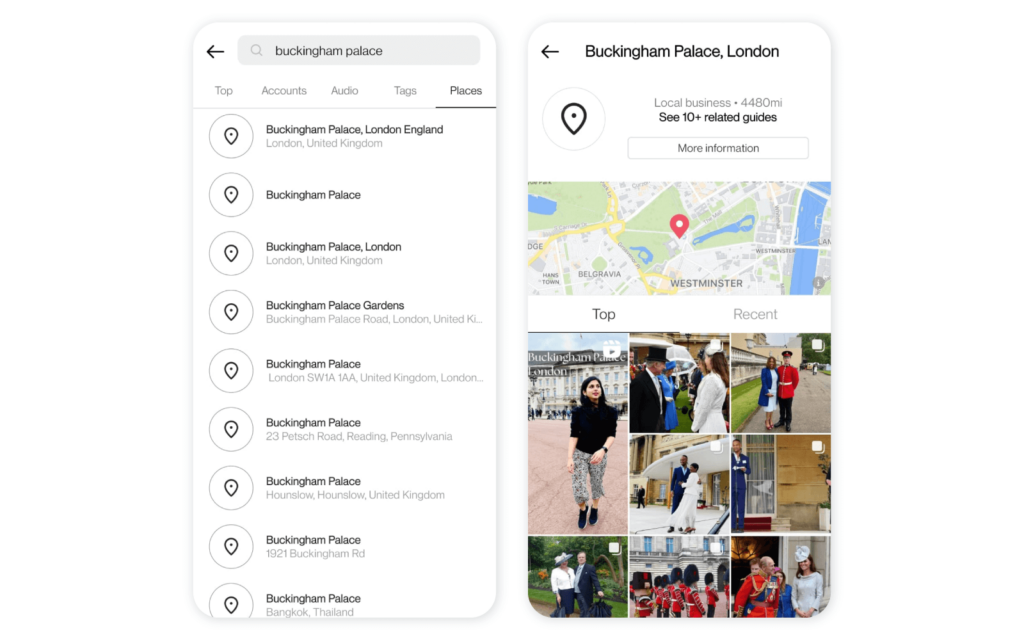
Type the name of the place and search. Five tabs appear across the top, usually Top, Accounts, Audio, Tags and Places. Instagram tests this row often, so the labels and their order can differ from what a colleague sees.
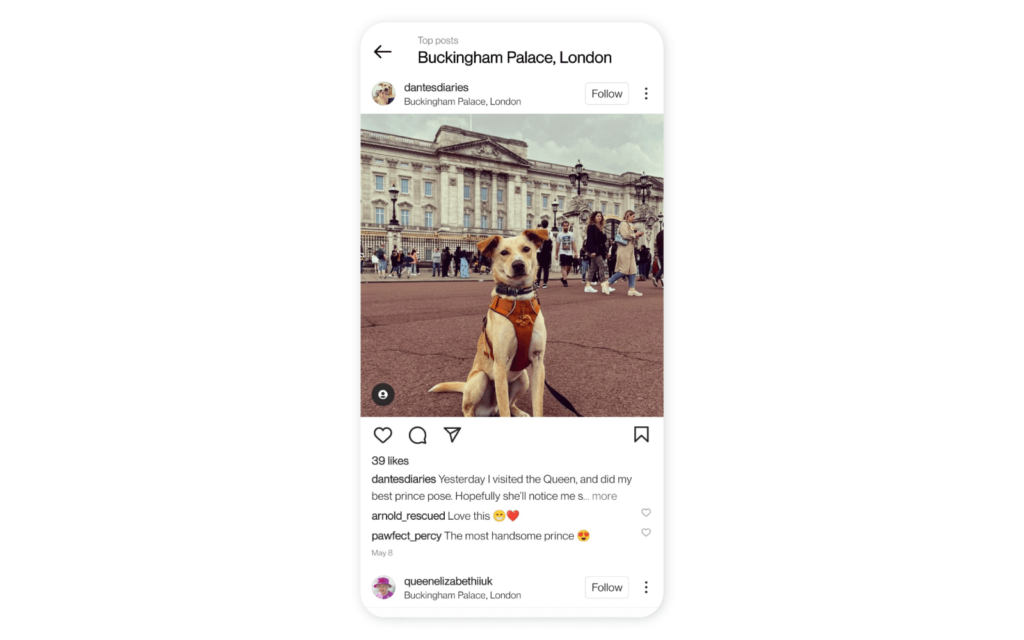
Select places and a list will appear of all the relevant locations that match your search. Select a location and you will be able to view Top and Recent posts geotagged in that location.
There’s a faster route if you already have a post from the place in front of you. The geotag sits at the top left of the post, above the image. Tap it and you land on the same location page, skipping the search entirely.
The same works for wherever you happen to be standing.
Open the search page, go to the Places tab, tap the search field and choose Near Current Location.
Select the geotag that you would want to explore from the list.
You will be able to view Top and Recent posts geotagged in that location.
How to search for Instagram users without an account
You don’t need an account to look at a public profile, you just need to get there from outside the app.
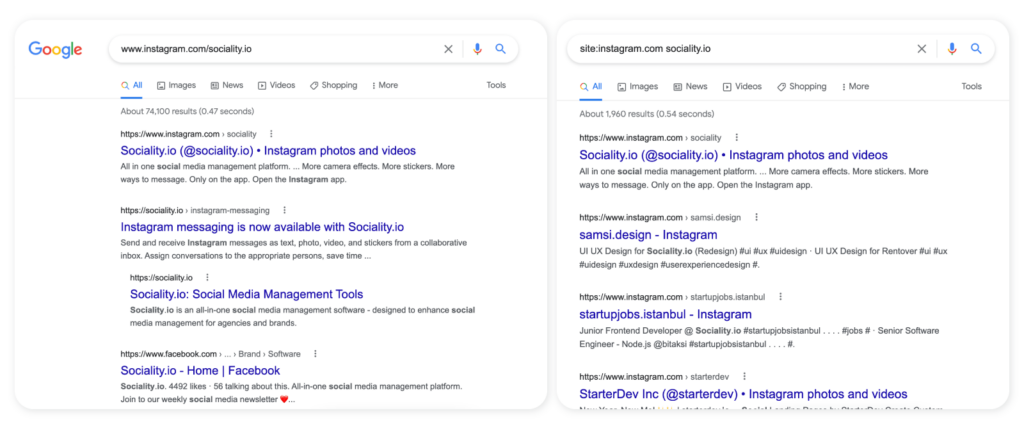
If you are somehow already aware of the Instagram user name, then type in the user name after www.instagram.com/<insert username> in the search engine (it can be Google or any other browser). For instance, https://www.instagram.com/sociality.io/. You can also use site:instagram.com <insert username>. For instance, site:instagram.com sociality.io
Open the profile from the results. Expect a ceiling, though. A logged-out browser shows a profile and a limited number of posts before Instagram interrupts with a login prompt, and mobile browsers hit that wall faster than desktop ones.
How to clear Instagram search history
Instagram keeps every search you’ve run, and it’s a short trip to wipe the lot.
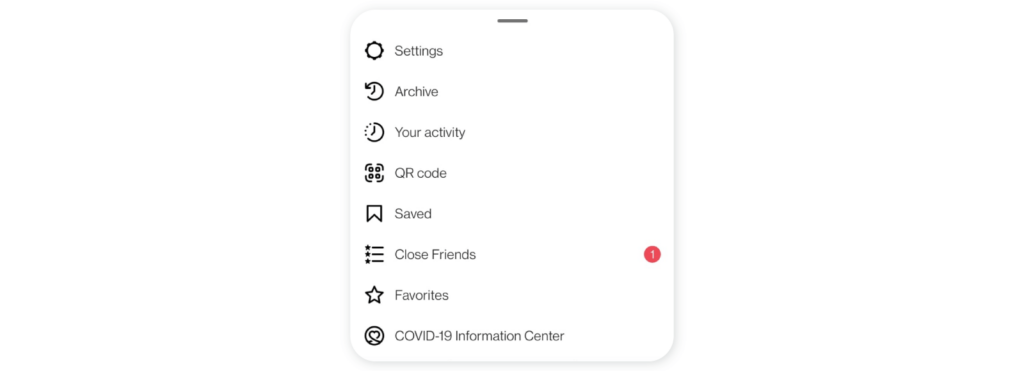
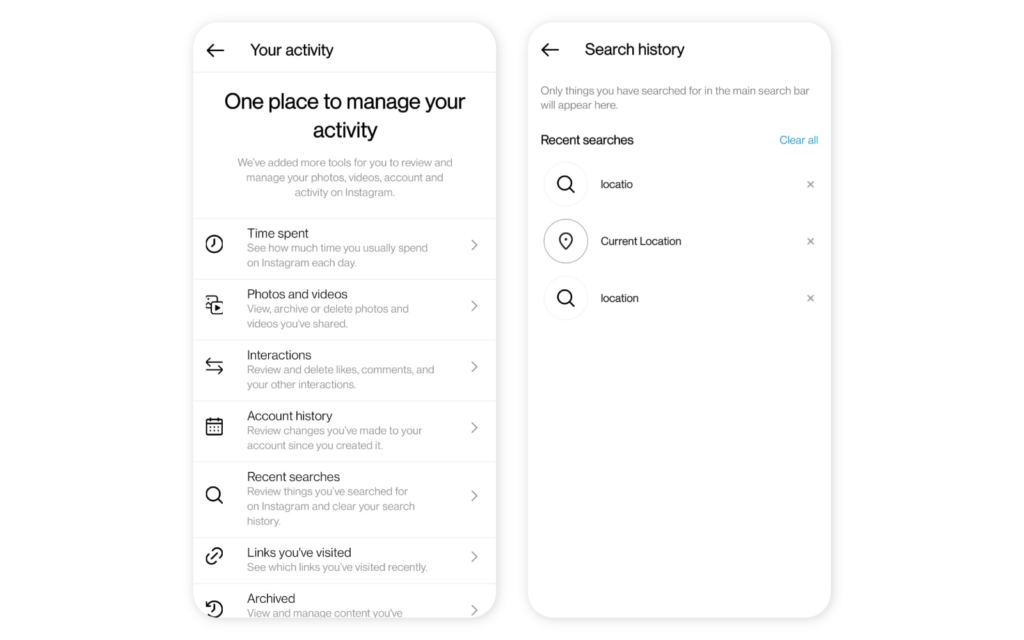
Go to your profile and tap the hamburger menu at the top right.
Next, tap on Your Activity and then Recent Searches.
Tap on Clear all
How to save posts for research (Collections)
If you’re researching competitors or collecting inspiration, use Save (Collections) and browser viewing (desktop or mobile web) to reduce accidental taps and keep your research organized. This is also easier to share internally because you can group saved posts by campaign, format, or theme.
How to clear Instagram search suggestions
Here’s how you can do it in a few simple steps.
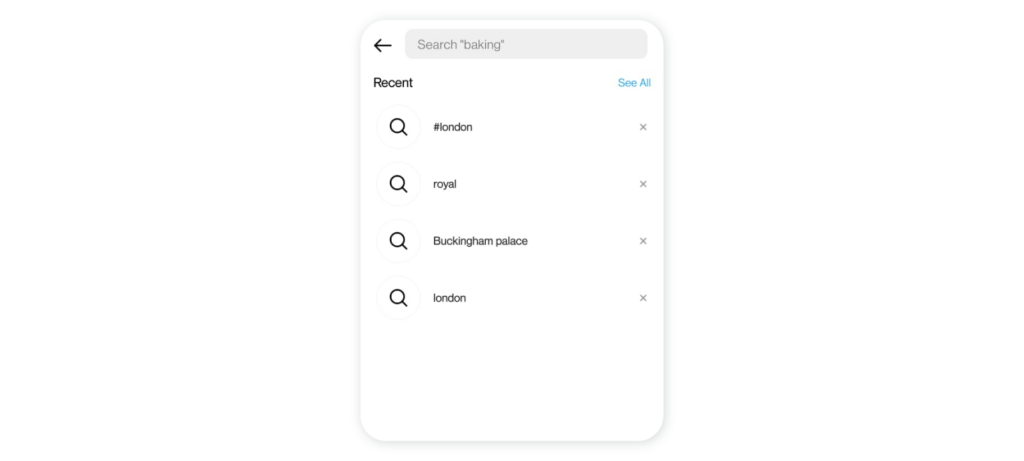
Tap on the magnifying glass icon ().
The search results will appear with an (x) sign.
You can clear these individually by clicking on (x) or by clicking on See All and then Clear All to remove searches in one go.
How to find relevant hashtags (and use up to 5)
Hashtags still categorise content and still feed search, but they stopped being the engine of discovery a while ago. On 18 December 2025 Instagram cut the cap from 30 to 5, and its stated reasoning is that a few targeted tags beat a long list of generic ones. Adam Mosseri has been blunter about it over the years, saying hashtags help people find a post through search but don’t expand its reach on their own. For the strategy side of this, our guide to Instagram hashtag strategy goes deeper than this page should.
Finding the right 5 is a search job in itself. Hashtags feed into the numbers you’ll later read in Reels analytics and across social media analytics in 2026, which is where you find out whether the 5 you picked were the right 5.
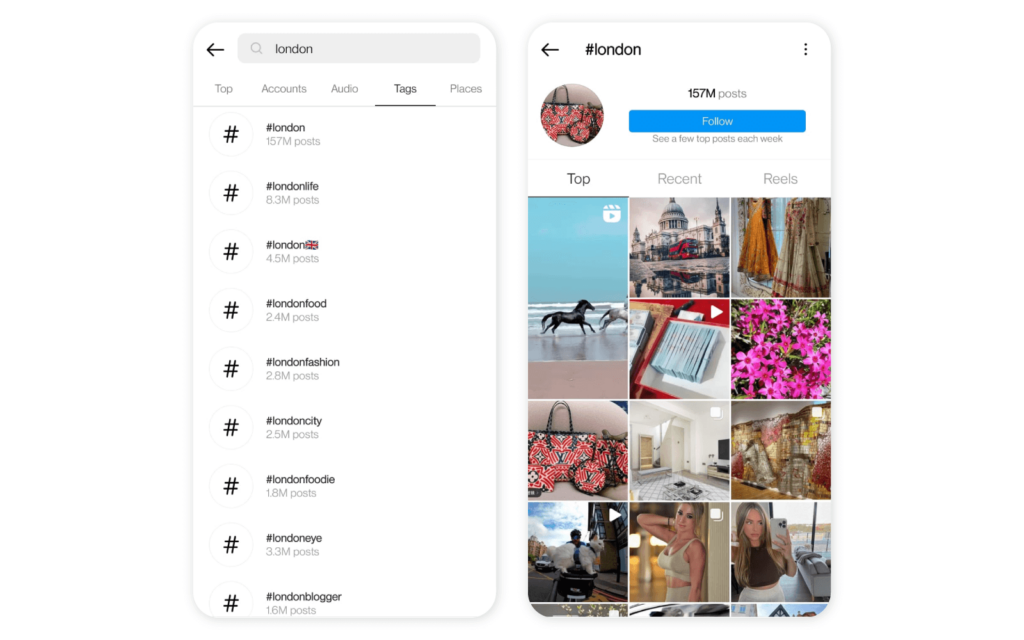
Tap the magnifying glass and type a seed keyword.
Type in a keyword and search. Five tabs will appear—Top, Accounts, Audio, Tags, and Places.
Tap on the Tag tab, and all relevant and top-performing hashtags will appear in your search.
Tap on the hashtag relevant to you, and you will also be able to view recent and top posts, as well as reels.
Can you search Instagram posts by keyword?
Partly, and the gap between what people expect and what actually exists is why there’s a whole industry of third-party tools sitting on this question.
The app will show you posts for a keyword. Type a phrase, stay on the Top tab, and you’ll get a mix of accounts, tags, places and individual posts it judges relevant. What you can’t do is anything a search engine would recognise as a query. There are no operators, no quotation marks for an exact phrase, no date range, no way to scope results to one account, and no way to see a complete result set rather than a personalised slice of one. Two people typing the same phrase get different posts back, and neither of them gets all of them.
The Tags tab gets you closest without leaving the app, because a hashtag page is the nearest thing Instagram maintains to an index. It’s an index of what people chose to tag, though, not of what they wrote.
How Google indexing changed what’s findable
The workaround stopped being a workaround in July 2025. Instagram now allows search engines to index public photos and videos from posts and reels published on or after 1 January 2020, for public professional accounts whose owner is over 18. Stories, highlights, private accounts and personal accounts stay out of it.
That quietly makes Google the closest thing to an advanced Instagram search anyone has. A query like site:instagram.com "kadıköy brunch" does the one thing the app refuses to, which is match an exact phrase across public captions. Add a handle to the path and you’re searching inside a single profile, so site:instagram.com/sociality.io analytics behaves like the in-account search Instagram has never shipped.
Two limits before you lean on it. Google only has what it has already crawled, so a post from this morning probably isn’t there yet. And any account owner can switch indexing off under Settings and Account privacy, which means an empty result proves nothing about an account except that it isn’t indexed.
Does Instagram tell anyone what you search?
No, in either direction.
Nobody is notified when you type their name, open their profile from the results, or scroll their grid. Instagram fires notifications for follows, likes, comments, mentions, tags, story replies and message requests, and searching sits on none of those lists. The one thing that does leave your name behind is a story view, because viewer lists are named, so a public account can spot you there even though the search that got you to them stayed invisible.
Going the other way, you can’t see who has been looking for you either. Instagram Insights reports profile visits as a count, never as a list of names, and there is no setting, no tab and no legitimate tool that converts one into the other. Anything promising otherwise is either guessing or after your login. If a follower suggestion looks suspiciously like someone who’s been checking up on you, that’s the recommendation engine reading mutual connections and synced contacts, not a report on who typed your handle.
That’s the set of Instagram search hacks worth knowing, including the handful the app never advertises. Most of them are one tap away once you know which tab they live behind.
If you’re doing this at work rather than out of curiosity, the searching-and-saving loop gets old fast once it’s several accounts and a weekly report. Sociality.io can manage your Instagram accounts from one place, competitor posts included, so the research you’d otherwise be bookmarking by hand ends up somewhere you can actually use it.
Instagram Search FAQ
Instagram ranks results using text relevance, your activity, and popularity. It matches keywords in names, bios, captions, hashtags, and places, then personalizes results based on what you follow or engage with and what performs well overall.
Accounts returns profiles, Tags shows hashtag pages and tagged content, and Places surfaces location pages and geotagged posts. The Top tab blends these results based on relevance and your interests.
Yes, as a supporting signal and inside a hard limit. Since 18 December 2025 Instagram allows up to 5 hashtags in a caption, down from 30. Adam Mosseri’s position is that hashtags help people find a post through search but don’t expand its reach on their own, so every one of the 5 should describe the post precisely.
No. Instagram removed the ability to follow hashtags. You can still search hashtags and browse content under them, but you won’t receive a followed-hashtag feed.
Search a place name, open the Places tab, select a location page, and browse Top or Recent posts. You can also tap a post’s geotag. Some accounts see nearby or current-location options.
Sometimes. You can view public profiles through a browser, but search depth and browsing are limited, and Instagram may prompt you to log in.
Go to Profile, open the menu, select Your activity, then Recent searches and choose Clear all or remove items individually. Suggestions update based on your searches and engagement.
Instagram frequently tests interface changes. Tabs and labels can vary by device, region, app version, and account type, even when ranking logic remains similar.
It’s Instagram’s content-restriction notice rather than a bug. The app shows it when a search term is associated with content that breaks its Community Guidelines, most commonly around self-harm, drugs or explicit material. Results aren’t removed, they’re limited, and for sensitive terms Instagram often surfaces a support resource in place of the usual grid.
No. Instagram’s search has no date filter and no chronological result option, so you can’t ask it for posts from a particular week or year. The nearest workaround is Google, where you can apply a custom date range to a site:instagram.com query, though that filters on when Google saw the page rather than when the post went up.
They’re connected but not the same thing. Explore is the algorithmic grid of recommendations Instagram builds for you without being asked, while search is what happens when you type into the field at the top of it. Explore answers what you might like. Search answers what you asked for.
Medha is a content writer and has worked in B2B and B2C communication across industries including digital marketing, health tech, SaaS, and manufacturing. She’s on a quest to indulge readers in content that sparks their interest.