
The best social media competitor analysis tools in 2026 are Sociality.io, Socialinsider, Metricool, Hootsuite, Sprout Social, Agorapulse, Emplifi and Brandwatch. I’d start with the networks you need to benchmark, then count the profiles and decide what your boss or client needs to see each month. A tool can publish to TikTok and still leave TikTok competitors out of its reports, so this guide compares coverage, competitor limits, exports, prices and what each tool can send to ChatGPT or Claude.
Key takeaways
- Only Sociality.io and Socialinsider benchmark competitors on all six major networks, including TikTok and LinkedIn.
- Metricool has the only free plan with competitor tracking: up to five competitors per network, but no TikTok or LinkedIn.
- Hootsuite, Sprout Social and Agorapulse limit competitor reports to Facebook, Instagram and, for the first two, X (full comparison).
- Benchmarking 1 brand against 5 rivals on Instagram, Facebook and TikTok costs $244 a month on Sociality.io Business with unlimited users (cost breakdown).
- Sociality.io, Socialinsider, Metricool and Agorapulse let ChatGPT or Claude read competitor data through MCP (how it works).
What is a social media competitor analysis tool?
A social media competitor analysis tool is software that compares your brand’s social media performance with the public activity of the competitors you choose. It collects follower growth, posting frequency, engagement and top posts for every profile, so you stop copying numbers into a spreadsheet by hand and get a report you can open again next month. Some tools also track mentions and sentiment, which tells you how people talk about each brand rather than what the brand posts.
The numbers only compare fairly when every profile uses the same dates and the same engagement formula; our guide to social media KPIs lists the metrics worth tracking, and social media analytics covers the data you get for your own accounts. For the full process, from picking rivals to turning numbers into decisions, read our social media competitor analysis guide.
Social media competitor analysis tools compared
Competitor coverage differs by network more than by anything else, and so does the plan you need for it. Prices are list prices on monthly billing, checked 25 November 2026.
| Tool | Best for | Competitor networks | Competitors per plan | Reports and exports | ChatGPT or Claude access to competitor data | Starting price (monthly billing) | Free plan or trial |
|---|---|---|---|---|---|---|---|
| Sociality.io | Scheduled benchmark reports for brands and agencies | Instagram, Facebook, TikTok, LinkedIn, YouTube, X | Shares the plan’s pages: 10 on Pro, 15 on Business, up to 15 per report | Excel, CSV, PPT, PDF; daily to quarterly email schedules | Yes, Sociality MCP (ChatGPT, Claude, Gemini Enterprise) | $99 | 14-day trial, no card |
| Socialinsider | Analysts comparing many accounts across networks | Instagram, Facebook, TikTok, LinkedIn, YouTube, X | Shares 20, 30 or 40 accounts by plan | PDF, PPT, XLS; automated reports | Yes, MCP on all plans | $99 | 14-day trial, no card |
| Metricool | Low-cost Facebook, Instagram and Threads comparisons | Facebook, Instagram, Threads, Bluesky, Twitch; YouTube and X on paid plans | 5 per network on Free, up to 100 on paid plans | CSV; PDF and PPT on paid plans | Yes, MCP on all plans, including Free | Free, then $25 | Free plan |
| Hootsuite | Teams that publish and benchmark in one tool | Facebook, Instagram, X | 5 on Standard, 20 on Professional and Advanced | PDF and PPT from Professional; CSV and XLSX on Advanced | Lumen MCP reads Talkwalker listening data (Enterprise) | $149 per user | 14-day trial |
| Sprout Social | Teams already reporting in Sprout | Facebook, Instagram, X | From Professional | CSV, PDF, scheduled PDFs | ChatGPT integration reads your own TikTok data only | $399 per seat (Professional) | 30-day trial |
| Agorapulse | Facebook and Instagram-first teams | Facebook, Instagram | 1 on Standard and Professional, 6 on Advanced | Yes, MCP for Claude, ChatGPT and Copilot | $99 per user | Free trial | |
| Emplifi | Large organizations with several teams | Facebook, Instagram, X, YouTube | 10 to 100 public profiles by plan | PDF, XLSX, scheduled delivery | Actions MCP with the API add-on; competitor access not documented | $1,249 | Demo |
| Brandwatch | Enterprise teams that also need listening | Facebook, Instagram, X, YouTube | 20 channel slots, more as an add-on | PDF, CSV, PPT | Not documented | Quote | Demo |
The 8 best social media competitor analysis tools in 2026
All eight tools work with the public data each network makes available, so none of them shows a competitor’s private reach, saves or ad spend. The real differences are which networks they cover, how many rivals fit in your plan and how much history you get when you add one.
1. Sociality.io
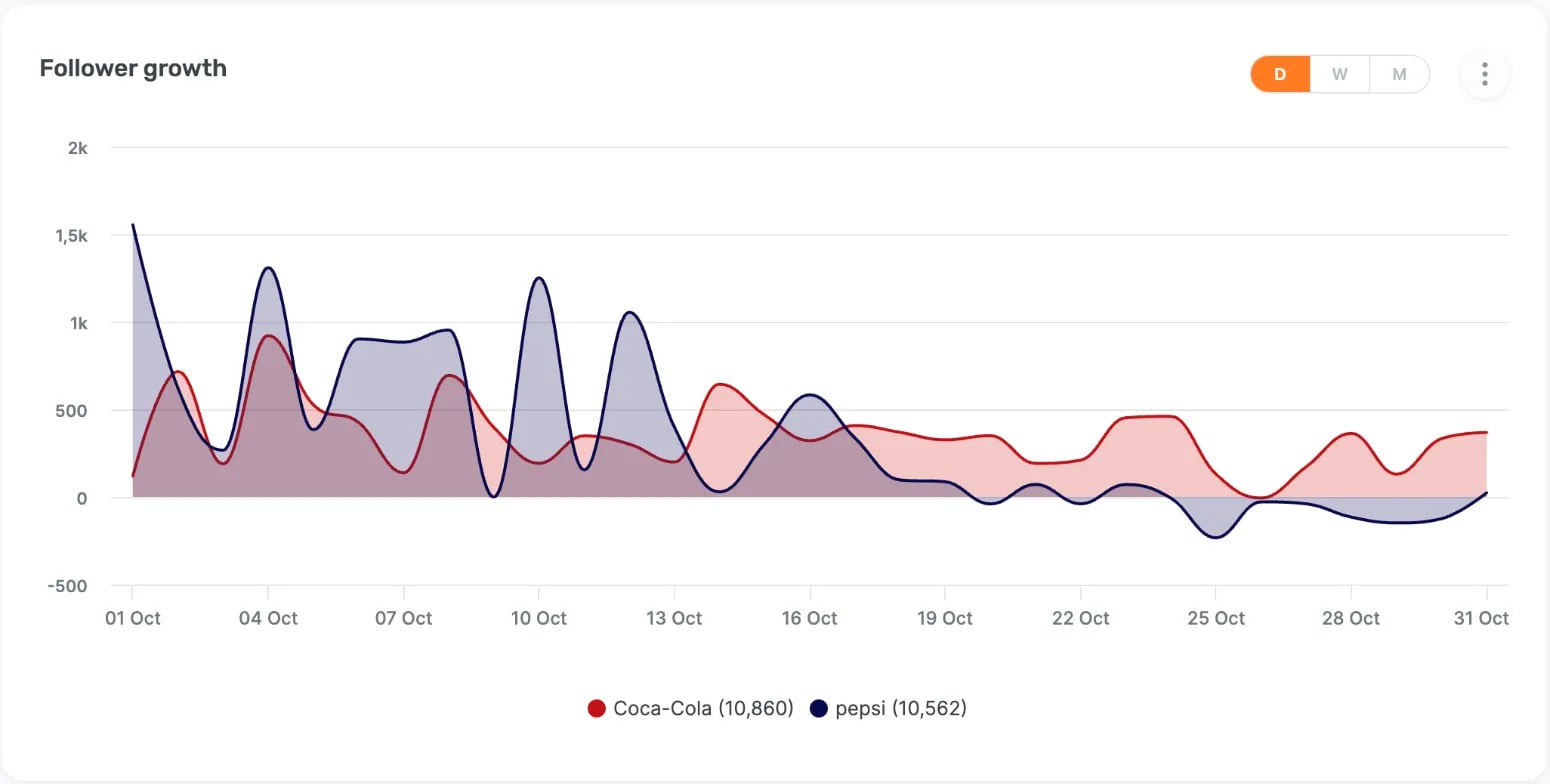
Sociality.io is the best social media competitor analysis tool for teams that share recurring benchmark reports. In the Sociality.io dashboard, our Competitor Analysis module tracks public profiles on Instagram, Facebook, TikTok, LinkedIn, YouTube and X. Reports show follower trends, post volume, likes, comments, engagement rate and top posts, and advanced filters sort competitors’ published and deleted posts by type or engagement. Each report compares up to 15 pages, and AI-generated summaries explain what changed.
A new competitor starts populating in about 45 minutes. Followers are tracked from the day you add the page, and the other metrics include its last 100 posts. You can export Excel, CSV, PPT or PDF, or schedule the same report to land in a client’s inbox daily, weekly, monthly or quarterly. Sociality MCP adds the same competitor stats and posts to ChatGPT, Claude or Gemini Enterprise, which I’d use when someone asks why a rival’s engagement jumped.
Pricing: Pro $99 a month (10 pages), Business $199 a month (15 pages, unlimited users, $15 per extra page); competitor and owned pages share the allowance. 14-day free trial, no credit card.
2. Socialinsider
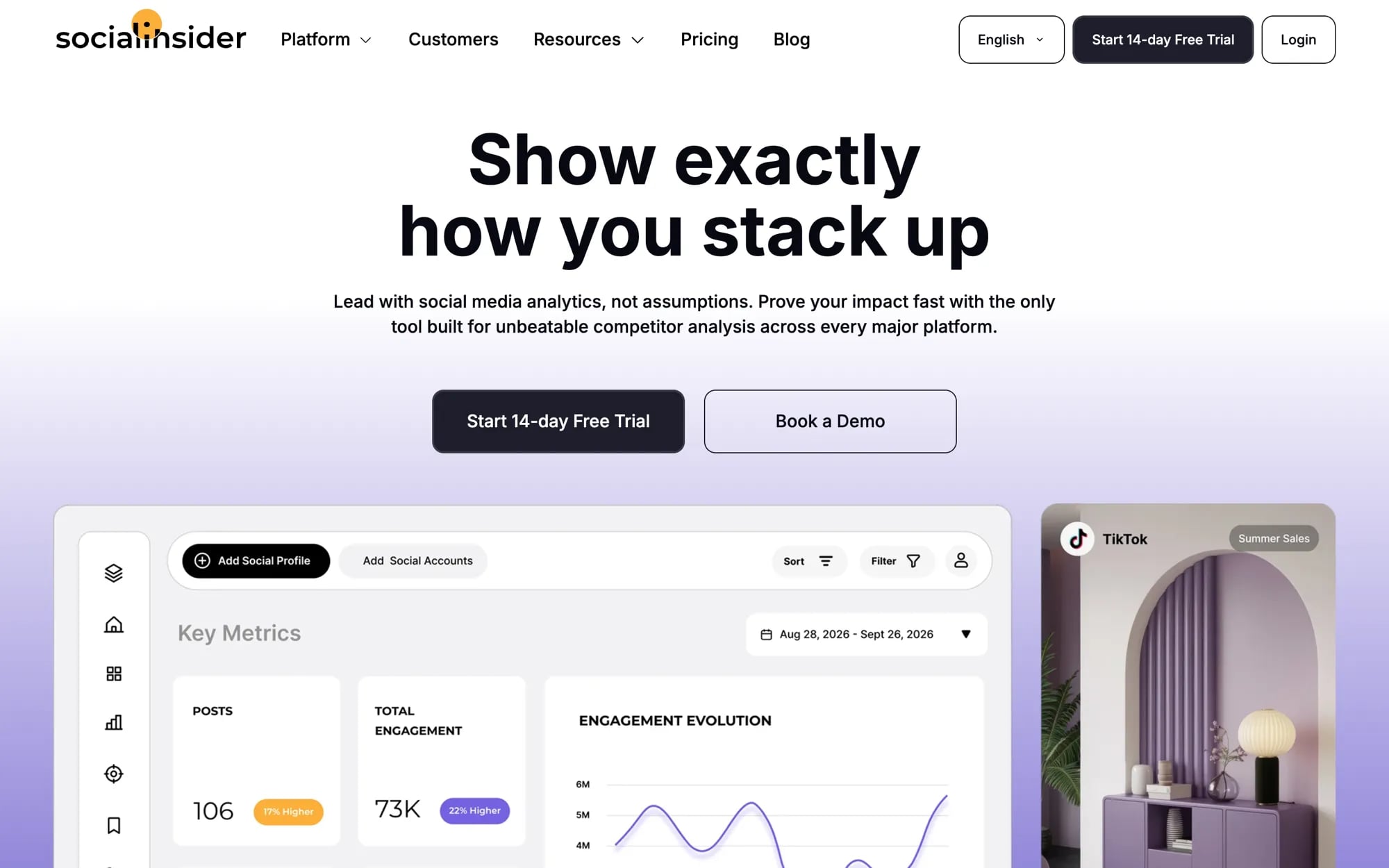
I’d pick Socialinsider for an analyst who spends most of the week comparing accounts. It benchmarks Instagram, Facebook, TikTok, LinkedIn company pages, YouTube and X, and groups competitors’ posts by topics, keywords or hashtags. The Adapt plan holds 20 social accounts, shared between your own profiles and competitors, with 3 months of historical post data; Optimize and Predict raise that to 30 and 40 accounts with 6 and 12 months. Follower counts start when you add a profile.
Benchmark reports export to PDF, PowerPoint and XLS, and automated reports come with every plan. Its MCP connector lets ChatGPT and Claude pull tracked competitors’ analytics on all plans.
Pricing: Adapt $99, Optimize $149 and Predict $239 a month, with 1, 2 and 5 seats. 14-day free trial, no credit card.
3. Metricool
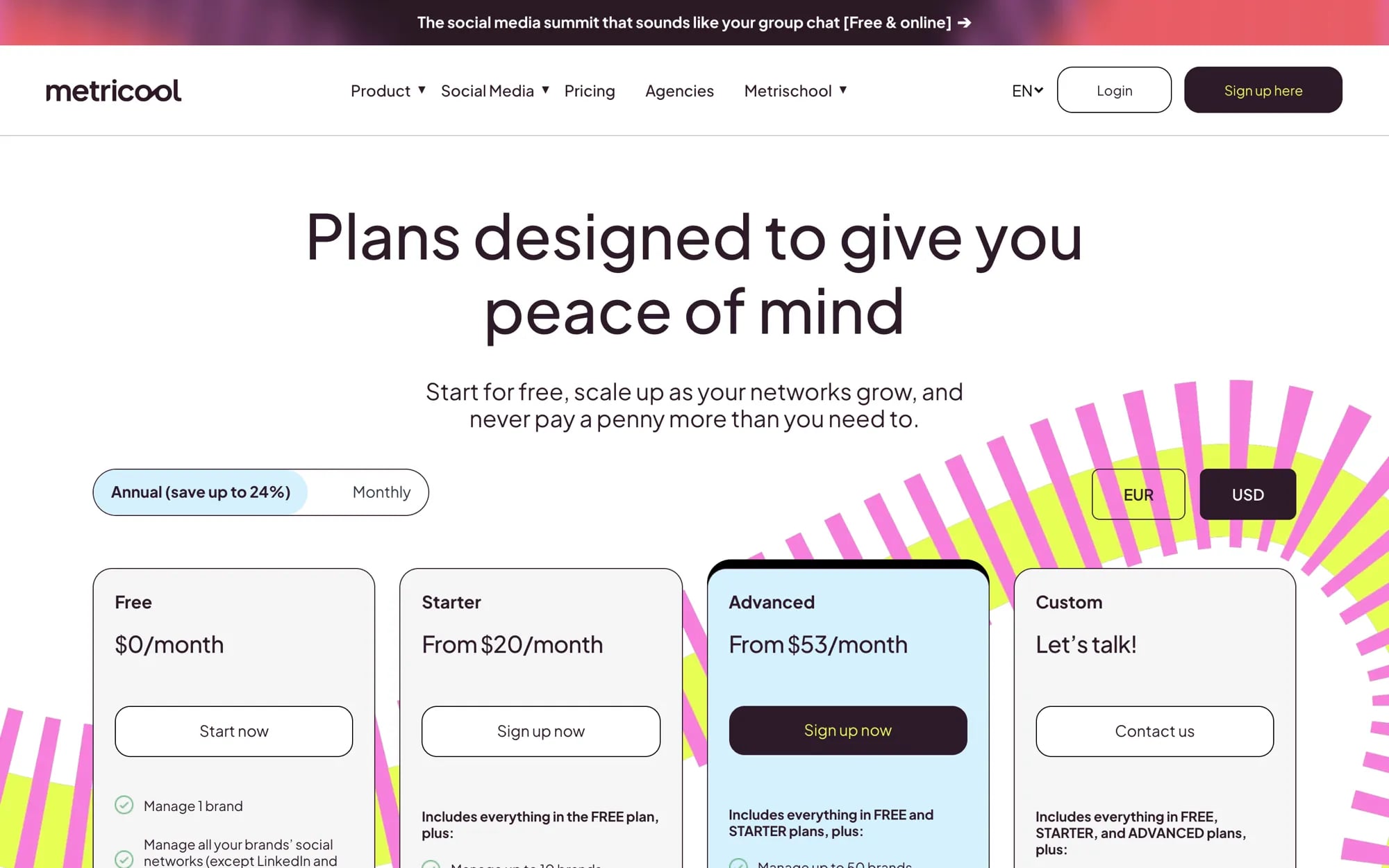
Metricool is a free way to start if you compare Facebook, Instagram or Threads accounts. The Free plan tracks up to five competitors per network on Facebook, Instagram, Threads, Bluesky and Twitch, but you can’t swap them once they’re added, so choose carefully. Paid plans raise the limit to 100 per network, add YouTube (up to 10) and X (a $10 a month add-on). TikTok and LinkedIn competitors aren’t supported.
The competitor table downloads as a CSV, and paid plans add PDF and PowerPoint reports. Metricool’s MCP works on every plan, including Free, so ChatGPT or Claude can compare your tracked competitors’ growth and engagement.
Pricing: Free for one brand; Starter $25 a month (5 brands) and Advanced $67 a month (15 brands) on monthly billing.
4. Hootsuite
Hootsuite suits a team that wants competitor tracking next to publishing and listening. Hootsuite Analytics compares competitors’ Facebook Pages, Instagram Business accounts and X profiles on audience growth, posting frequency, engagement, hashtags and top posts. Standard tracks 5 competitors, while Professional and Advanced track 20 and add PDF and PowerPoint exports; Advanced adds CSV and XLSX and scheduled emails to people outside your workspace.
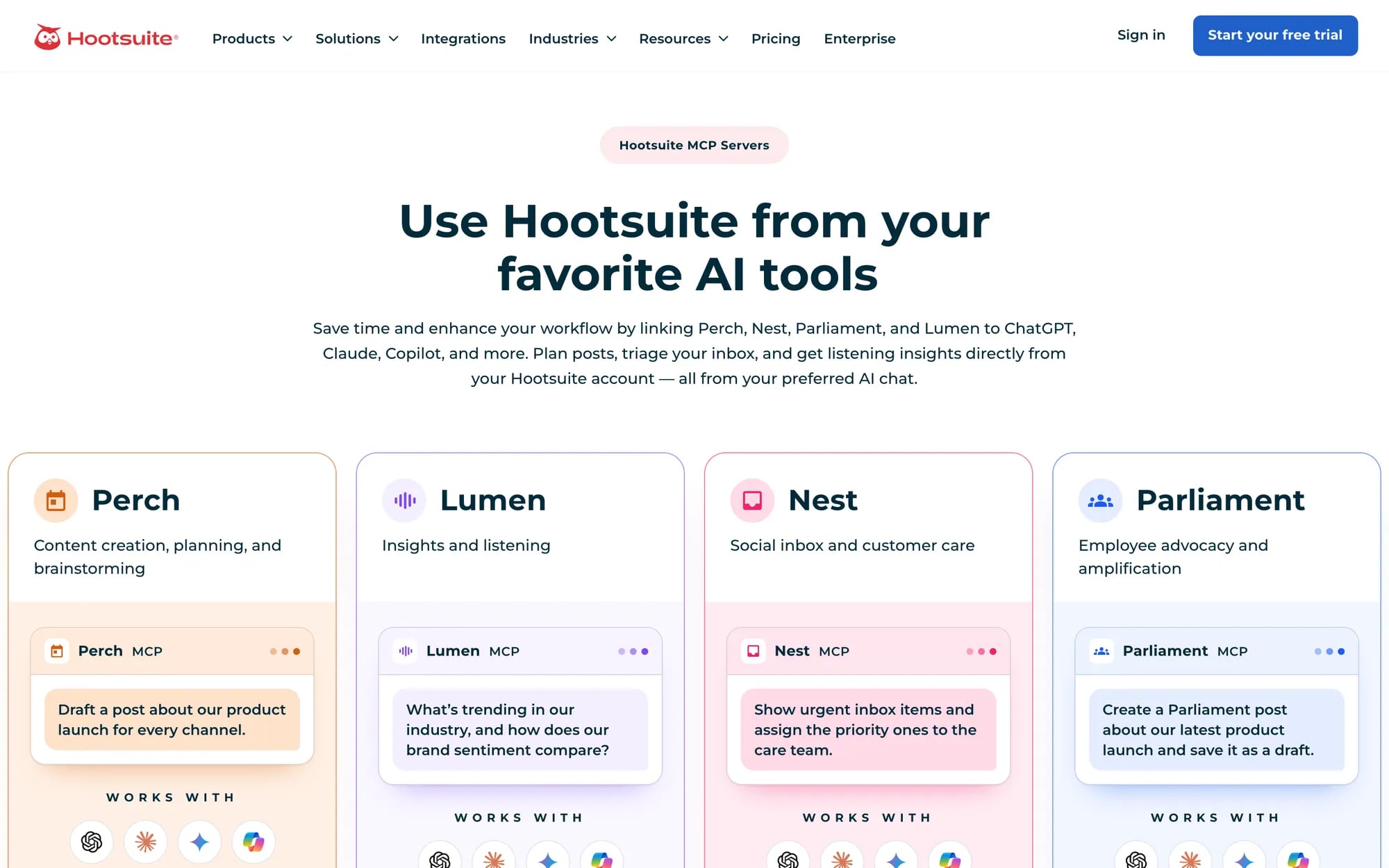
Post data backfills up to 30 days when you add a competitor, and follower history starts that day. Hootsuite’s Lumen MCP can read Talkwalker listening data, such as competitor mentions and sentiment, in ChatGPT or Claude on Enterprise. If you’re weighing the price, our Hootsuite alternatives compare cheaper options.
Pricing: Standard $149, Professional $299 and Advanced $499 per user a month on monthly billing ($99, $199 and $399 billed annually). 14-day free trial.
5. Sprout Social
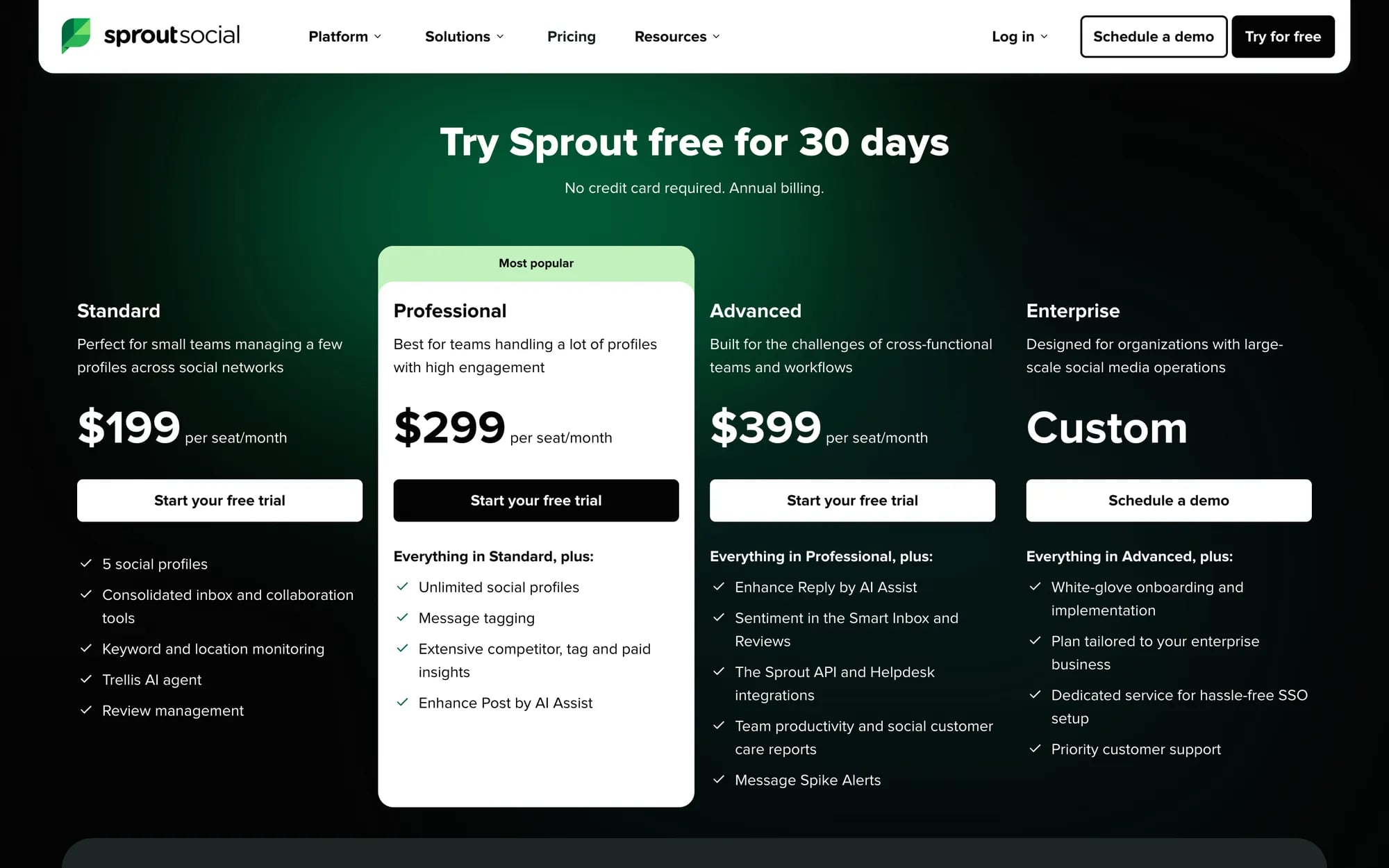
Sprout Social fits a team that already publishes and reports in Sprout. Competitor reports start on the Professional plan and cover Facebook, Instagram and X, comparing audience growth, post volume, public engagement and top posts. You can export CSV or PDF and schedule PDF reports. LinkedIn, TikTok and YouTube competitors aren’t in the reports.
Sprout’s ChatGPT integration reads your own TikTok post performance, not competitor data. Our comparison of Hootsuite and Sprout Social side by side covers the rest of each suite, and there are cheaper Sprout Social alternatives if competitor reports are the main reason you’re looking.
Pricing: Professional $399 per seat a month on monthly billing ($299 billed annually). 30-day free trial.
6. Agorapulse
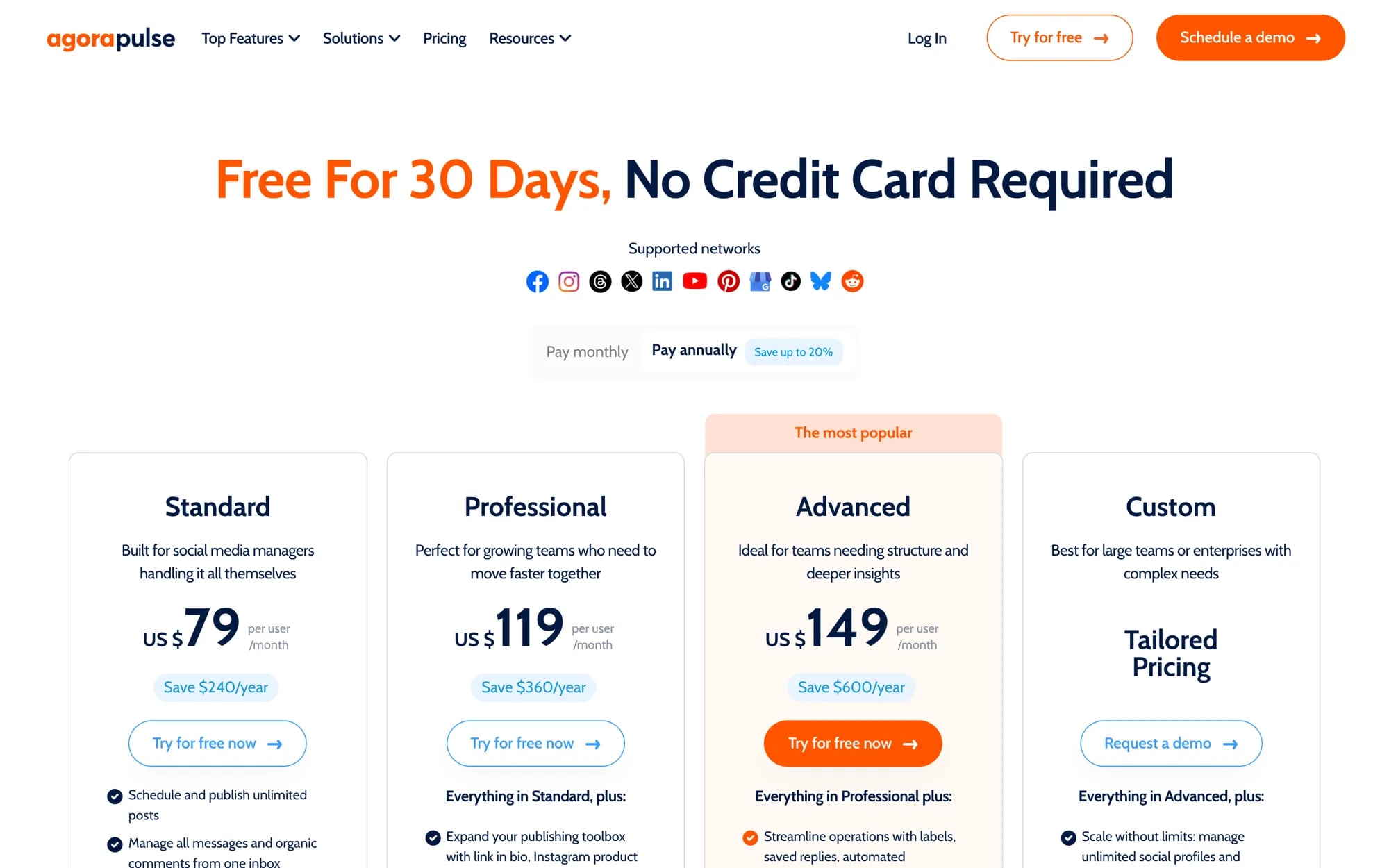
Agorapulse makes sense if Facebook and Instagram account for most of your reporting. Its Competitors report compares follower change, post counts and types, engagement and top posts for Instagram professional profiles and Facebook Pages. Standard and Professional include one competitor, and Advanced includes six. When you add a rival, Agorapulse pulls up to 30 days of posts and starts recording followers that day.
The report exports to PDF. Agorapulse’s MCP, launched in October 2026, works with Claude, ChatGPT and Microsoft Copilot and lists a competitors benchmark among the reports you can ask for.
Pricing: Standard $99, Professional $149 and Advanced $199 per user a month on monthly billing.
7. Emplifi (formerly Socialbakers)
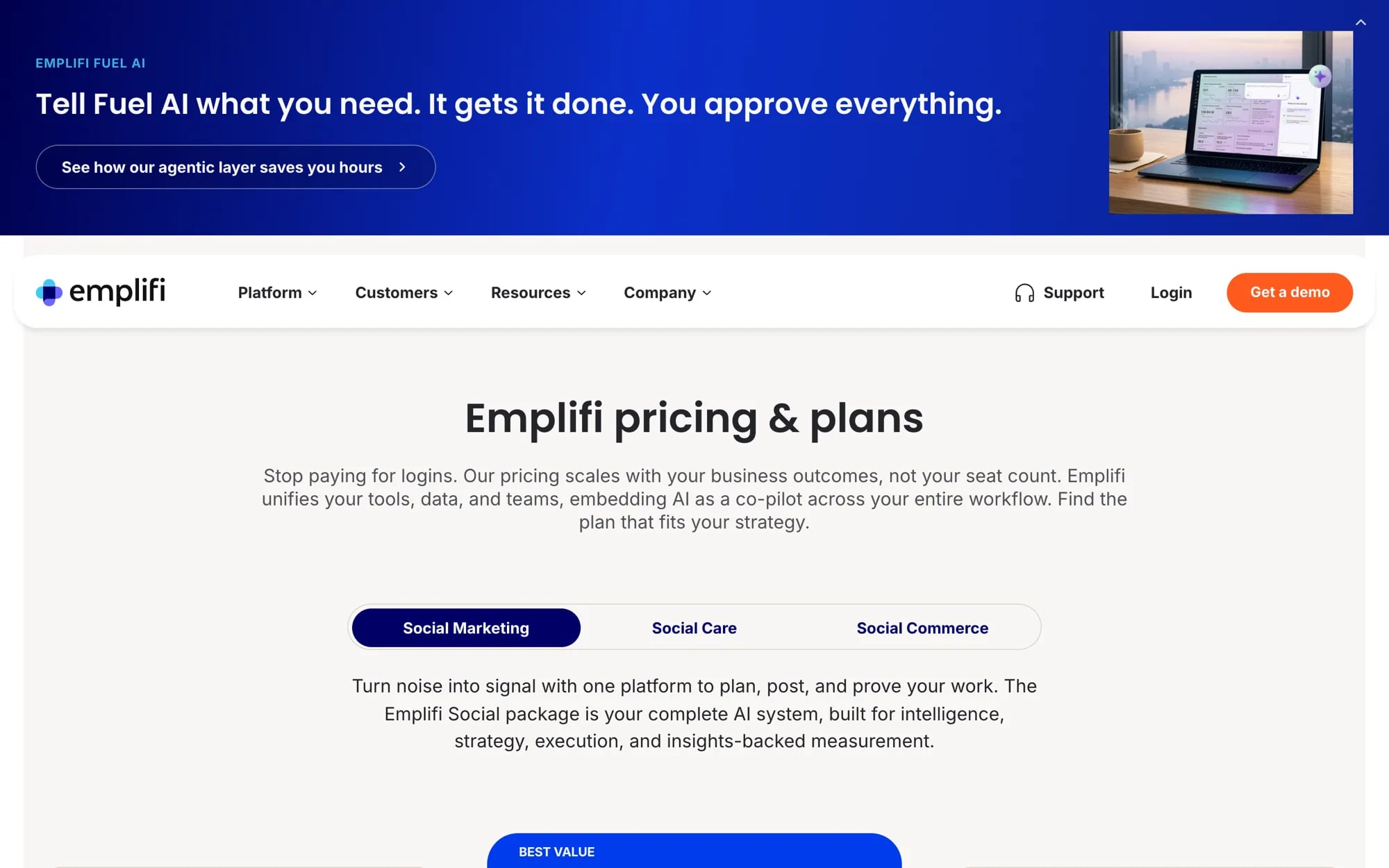
Emplifi, which Socialbakers became in 2021, suits larger organizations with several teams and brands. Its Unified Analytics compares public Facebook, Instagram, X and YouTube profiles, one-to-one or several at once, and it can flag competitors’ promoted posts. Plans include between 10 and 100 public profiles, with unlimited users and owned profiles.
Boards export to PDF and XLSX and can be scheduled. Emplifi’s Actions MCP connects ChatGPT and Claude through its API add-on, but its help pages don’t say whether it reads competitor profiles.
Pricing: Essential from $1,249 a month and Advanced from $2,499 a month; Intelligent is quoted.
8. Brandwatch
Brandwatch fits enterprise teams that want long post history or already use it for listening. Benchmark, an add-on to its Social Media Management suite, covers public Facebook, Instagram, X and YouTube channels with 20 channel slots by default, and your own channels count toward them. Posts go back up to two years when a channel is added, while fan counts start that day.
Benchmark exports PDF, CSV and PowerPoint. For sentiment analysis and wider conversations about rival brands, Brandwatch sells Consumer Research separately.
Pricing: quote only; Brandwatch offers demos rather than published prices.
How much does competitor tracking cost?
The entry price says little, because tools count profiles, seats and networks differently. Here’s the starting plan with competitor reports for each tool, on monthly billing:
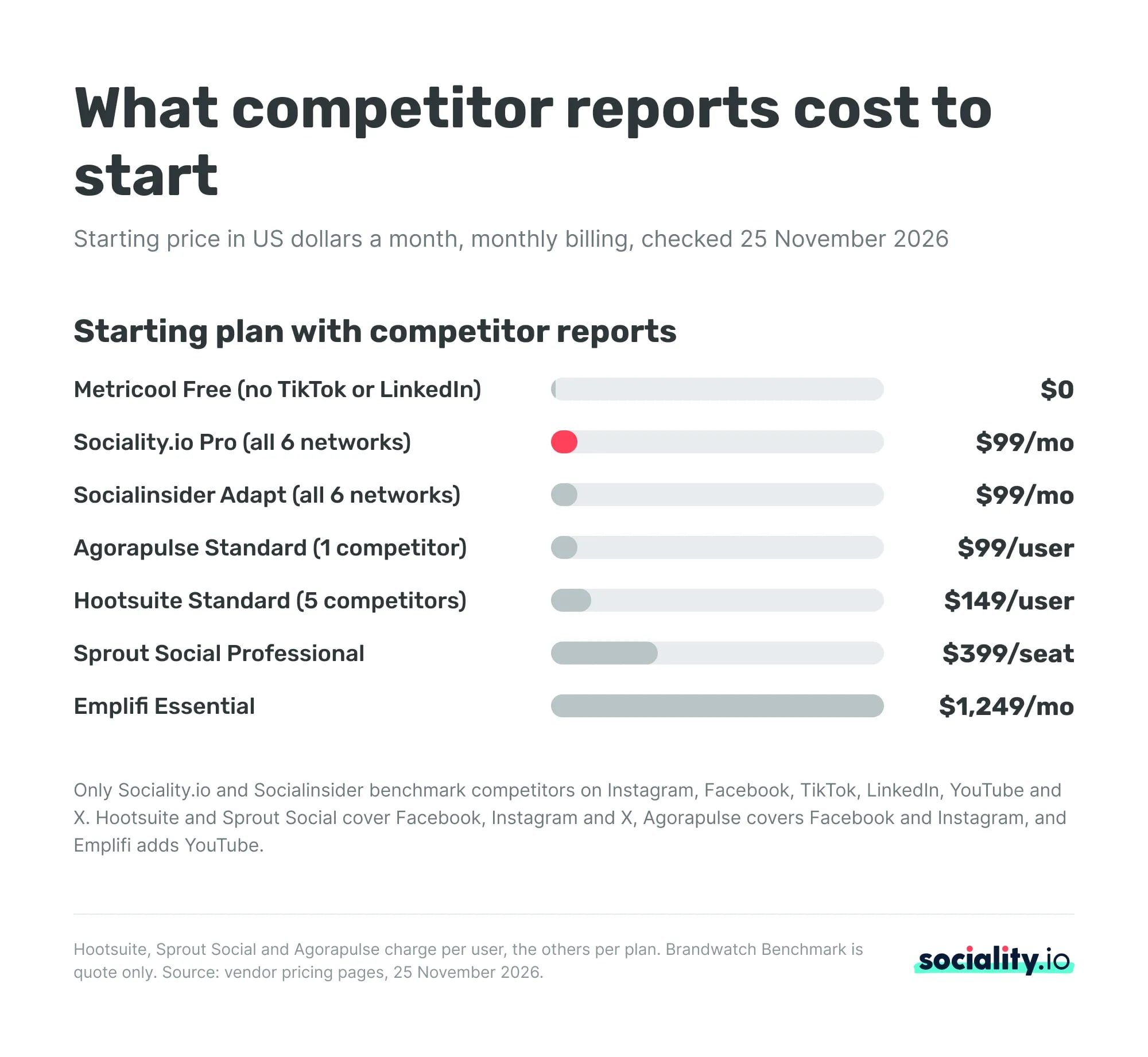
Metricool Free costs $0, Sociality.io Pro and Socialinsider Adapt cost $99 a month, Agorapulse Standard $99 per user (one competitor), Hootsuite Standard $149 per user (five competitors), Sprout Social Professional $399 per seat and Emplifi Essential $1,249 a month. Brandwatch quotes Benchmark on request.
A real brief changes the order. Say one agency analyst benchmarks a client against five competitors on Instagram, Facebook and TikTok. That’s 6 brands × 3 networks = 18 profiles:
- Sociality.io Business: $199 + 3 extra pages × $15 = $244 a month, with unlimited users, so the account manager and the client can log in too. Pro’s 10 pages fall short.
- Socialinsider Adapt: $99 a month, since 18 profiles fit in its 20 accounts; each extra seat means moving to Optimize ($149, 2 seats) or Predict ($239, 5 seats).
- Metricool, Hootsuite, Sprout Social, Agorapulse, Emplifi and Brandwatch: none of them benchmark TikTok competitors, so no plan covers this brief.
I’d count every handle before comparing plans: one competitor on three networks takes three profile slots.
Can ChatGPT or Claude analyze your competitors?
Yes, if you connect them to a tool that tracks your competitors. An MCP connection lets ChatGPT or Claude request data from that tool, so you can ask a follow-up about the posts behind an engagement spike without exporting another spreadsheet. What you get depends on what the connector reads.
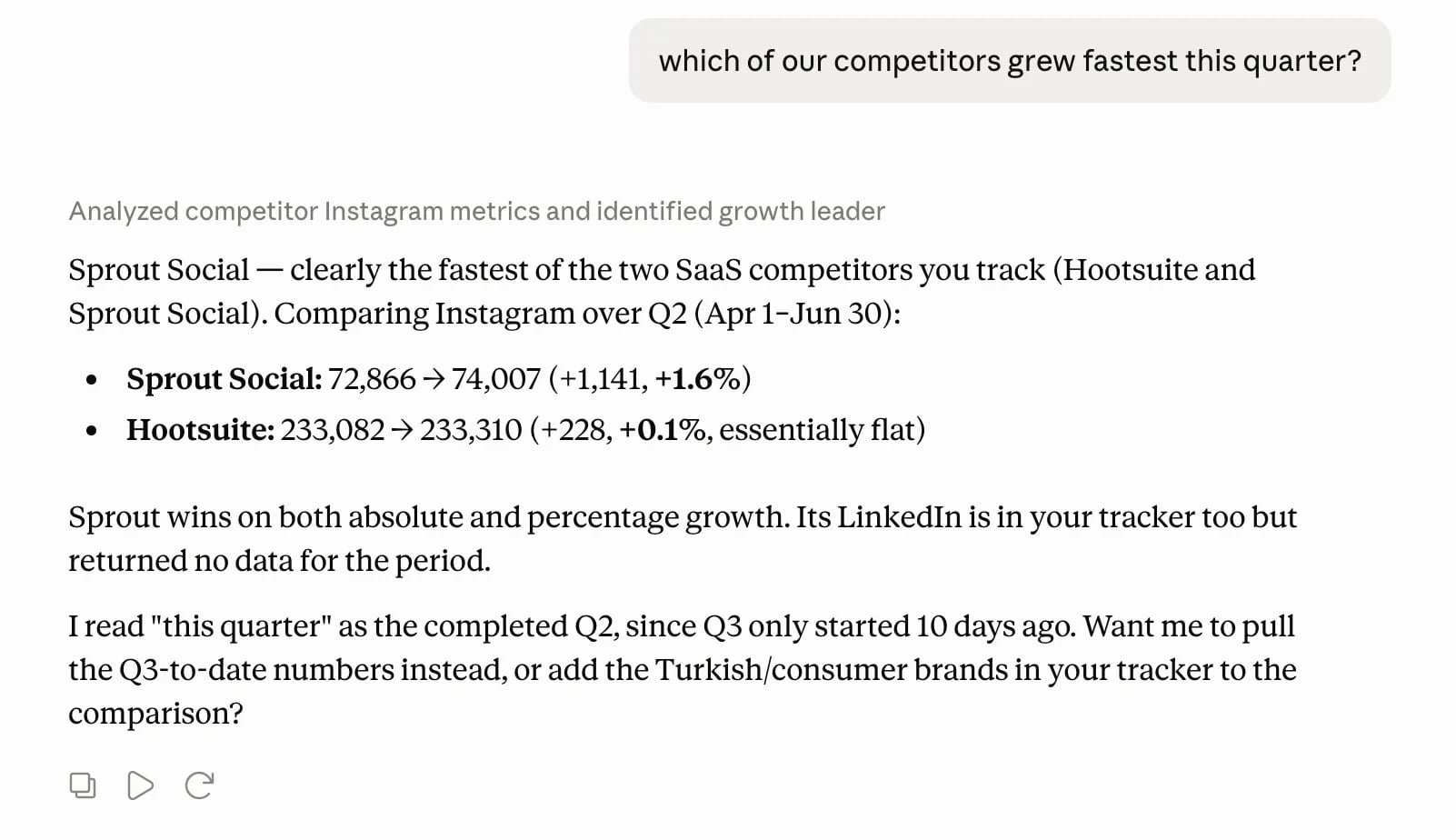
Sociality MCP and Socialinsider document access to tracked competitor stats and posts, Metricool compares tracked competitors on every plan, and Agorapulse lists competitor benchmarks among its reports. Hootsuite’s Lumen reads Talkwalker listening data, which helps with mentions and sentiment rather than profile benchmarks, and Sprout’s ChatGPT integration only covers your own TikTok posts. Sociality MCP is a social media MCP server with 8 tools, 6 of them read-only; the other two connect an account and add a competitor. It works in ChatGPT, Claude and Gemini Enterprise.
Try a prompt like this with Sociality MCP: “Compare our Instagram, Facebook and TikTok accounts with these five tracked competitors for last month. Group the results by network, show follower change, post counts and the three posts with the most interactions, and flag any missing data.” Our guide to competitive analysis with ChatGPT walks through a full example.
How to choose the right competitor analysis tool
Start with the networks you report on, then count the profiles and check what the report has to look like.
Solo marketer. Metricool Free covers a basic Facebook, Instagram or Threads comparison. If TikTok or LinkedIn competitors matter, compare Sociality.io Pro and Socialinsider Adapt, which both start at $99 a month.
In-house brand team. Work backward from the meeting where you share the numbers. Check how far posts backfill and when follower history starts, because a rival added today won’t have last quarter’s follower curve in any tool. If several people need access, per-user pricing adds up fast, which is why we recommend Sociality.io Business with unlimited users.
Agency. Count handles across clients and rivals, then price seats and profiles together. Check whether you can schedule a report to a client’s email, export a slide deck and add the client’s logo; Hootsuite, for example, keeps external scheduled emails and report logos on Advanced.
Enterprise. Security review usually comes first, and that’s where Sociality.io is a good option: security is our top priority, so data is encrypted in transit and at rest, logins have two-factor authentication and role-based access, and third-party experts run yearly penetration tests (see our security practices). Enterprise plans also keep competitor data for 25 months. Then decide which questions need profile benchmarks and which need listening. Ask how the tool defines share of voice: Brandwatch Benchmark counts publishing activity, while mention-based share of voice comes from listening products such as Brandwatch Consumer Research or Hootsuite’s Talkwalker.
How to run a competitor analysis with these tools
Build a watchlist and use one date range for every brand. Start with posting frequency, format mix and top posts, and read the captions as well as the numbers: the topics a rival keeps returning to say more than its follower count. Our guide to finding unicorn content shows how to spot the outliers worth copying.
Next, open the Meta Ad Library for competitors’ active Facebook and Instagram ads, and note the offers, formats and calls to action; this guide shows how to track competitors’ promoted Instagram posts. Keep ads separate from the organic comparison.
For engagement, compare the same public interactions for every profile, then read a sample of comments and how each brand handles negative feedback. Finish with each competitor’s bio and pinned posts to see how it positions itself. Our social media competitor analysis guide covers choosing rivals, metric definitions and a SWOT template.
Competitor analysis guides by network
Each network shows different public data, so the comparison works a little differently on each one:
- Competitor analysis on Instagram
- Competitor analysis on Facebook
- Competitor analysis on LinkedIn
- Competitor analysis on X (formerly Twitter)
Competitor analysis tool FAQs
What is the best social media competitor analysis tool?
Sociality.io is the best social media competitor analysis tool for teams that want regular benchmark reports. The Sociality.io dashboard compares public profiles on Instagram, Facebook, TikTok, LinkedIn, YouTube and X and schedules Excel, PPT or PDF reports. For reports in chat, Sociality MCP pulls tracked competitors’ stats and posts into ChatGPT or Claude.
Is there a free social media competitor analysis tool?
Yes. Metricool’s free plan lets you track up to five competitors per network on Facebook, Instagram, Threads, Bluesky and Twitch. You can’t change them after adding them, and TikTok and LinkedIn competitors aren’t supported. Sociality.io and Socialinsider offer 14-day free trials with no credit card if you need all six networks.
Can I see my competitors’ Instagram or TikTok analytics?
You can see their public data: posts, likes, comments, views where shown and follower trends. A competitor analysis tool collects it for you and compares it over time. Private metrics such as reach, saves, audience demographics and ad spend are only visible to the account owner, so no tool can show them.
Can ChatGPT or Claude do a competitor analysis?
Yes, with data. You can upload a benchmark export, or connect the assistant to a tool that tracks competitors through MCP. With Sociality MCP, you can ask for follower changes and the posts with the most interactions across six networks. Name the accounts, dates and metrics in your prompt and ask it to flag missing data.
How many competitors should I track?
Three to five direct competitors per network is enough for most brands, plus one aspirational brand you want to learn from. More than that makes the report hard to read. Check how your tool counts them: on Sociality.io and Socialinsider every competitor profile uses a slot in your plan.
How do I do a competitor analysis on social media?
Choose your rivals and one date range, then compare follower growth, posting frequency and engagement with the same formula for every profile. Read their top posts and a sample of comments for context, and end with one action you’ll check next month. Our social media competitor analysis guide walks through each step.
Is SWOT used for competitor analysis?
Yes. Use a SWOT after you’ve reviewed the metrics and posts. A competitor’s steady results with one format can be a strength, and a recurring complaint in its comments can point to a weakness or an opportunity for your brand. Back each point with a number from the benchmark report.